Handheld Chaos vs. Stable Footage: Action Camera Tripods
Action cameras are built to go where ordinary cameras cannot: strapped to a handlebar, dipped in a river, or bouncing along a mountain bike trail. That rugged freedom is exactly why so much action footage ends up shaky, tilted, or disorienting to watch. The camera captures everything, including every jolt, wobble, and unintended angle. Built-in stabilization helps, but it cannot rescue a shot that was poorly positioned in the first place.
This article compares handheld and mounted approaches, showing where each works and where stable support makes the difference between footage people skip and footage people share. It is written for weekend riders, hikers, skiers, and travel vloggers who want their adventures to look as good on screen as they felt in person. You will find practical guidance on choosing support by activity, securing your camera so it does not disappear on the trail, and using stable positions to capture angles that handheld shooting simply cannot achieve.
Why Rugged Cameras Still Need Stable Support
It is tempting to assume an action camera does not need a tripod. After all, it is designed for movement. But movement in the scene is different from movement of the camera. Viewers enjoy watching a rider carve through a turn; they do not enjoy watching the frame lurch every time the person holding the camera takes a step.
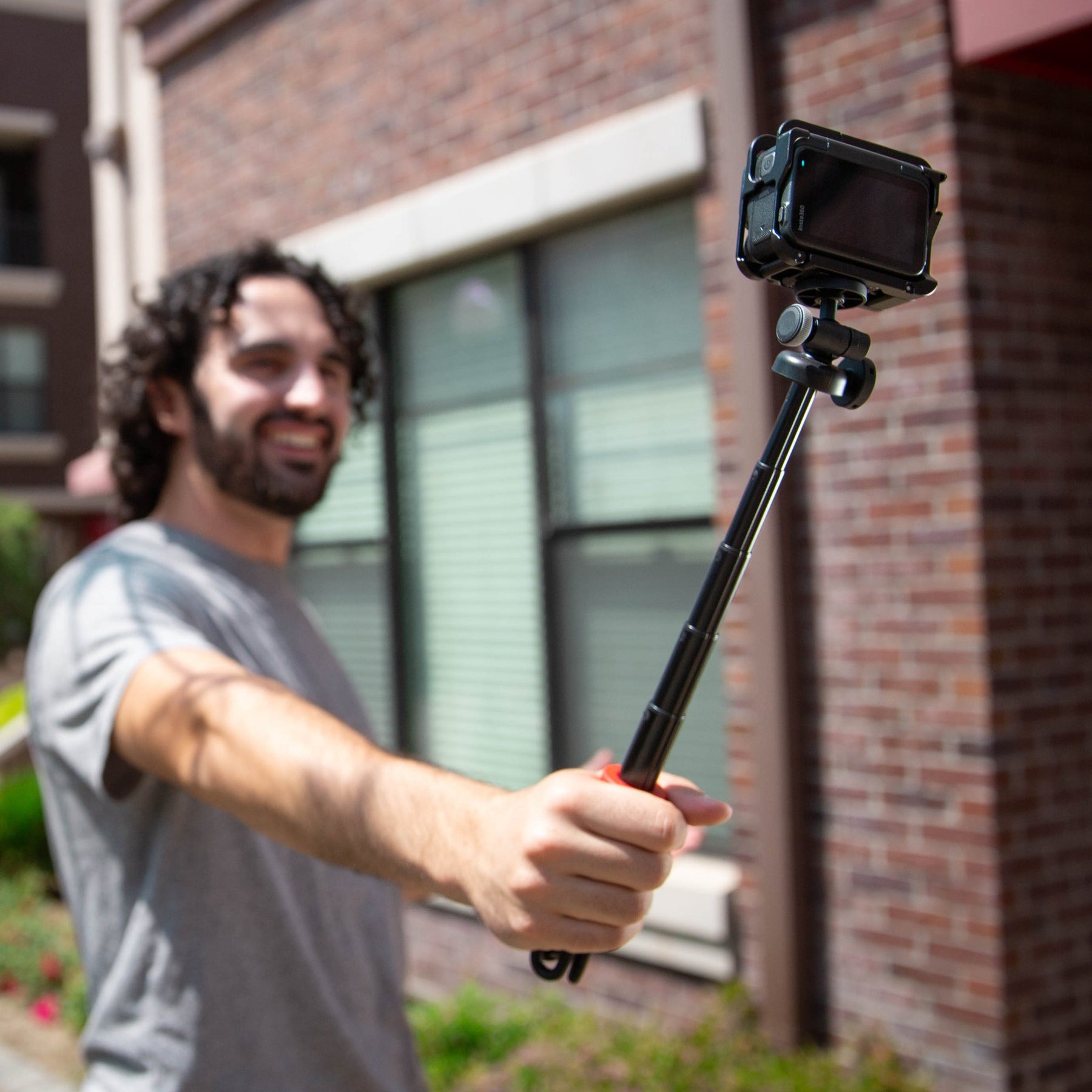
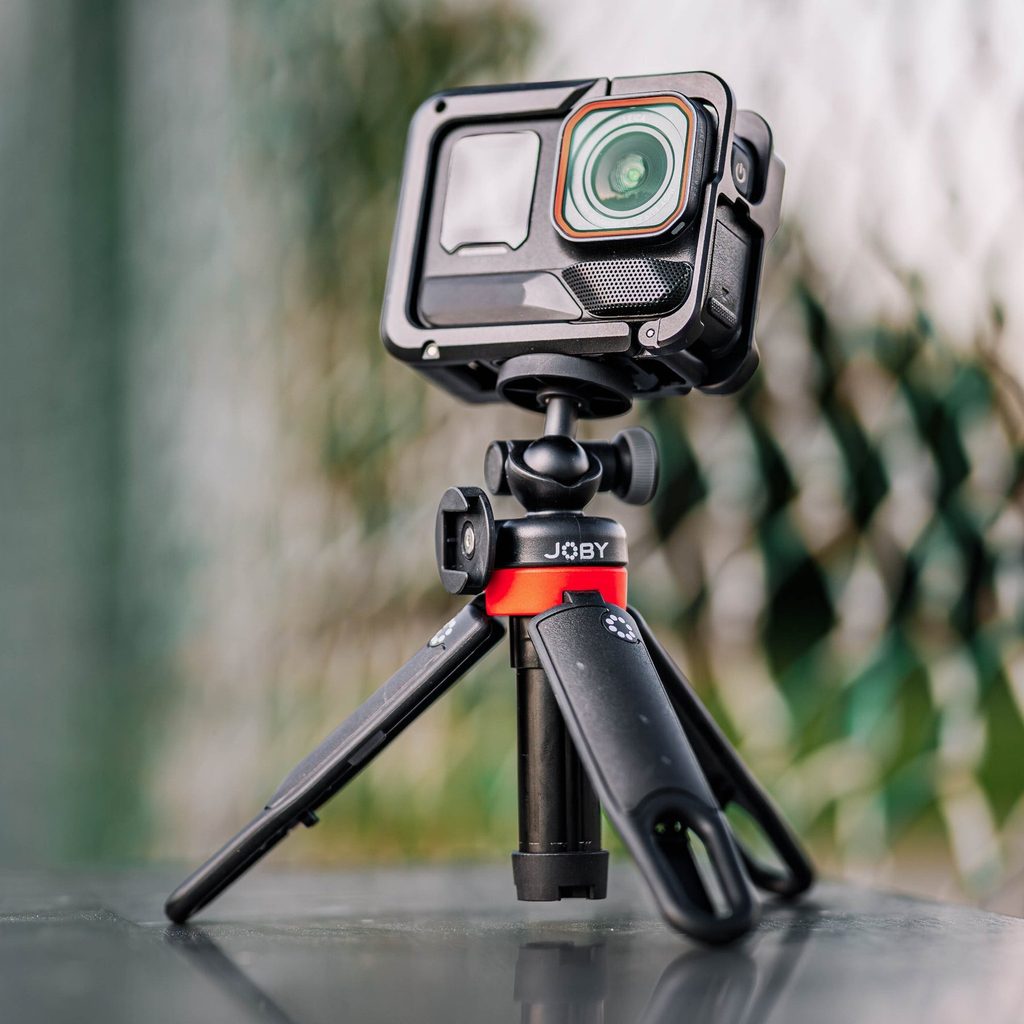
Action Camera Tripods give these small cameras a stable base, a grip, or an anchor point on surrounding objects. That stability supports cleaner establishing shots, steady interviews at the trailhead, and time-lapses of changing weather, all of which add context and pacing to an edit. Without them, a video can feel like one long, chaotic clip with no sense of place.
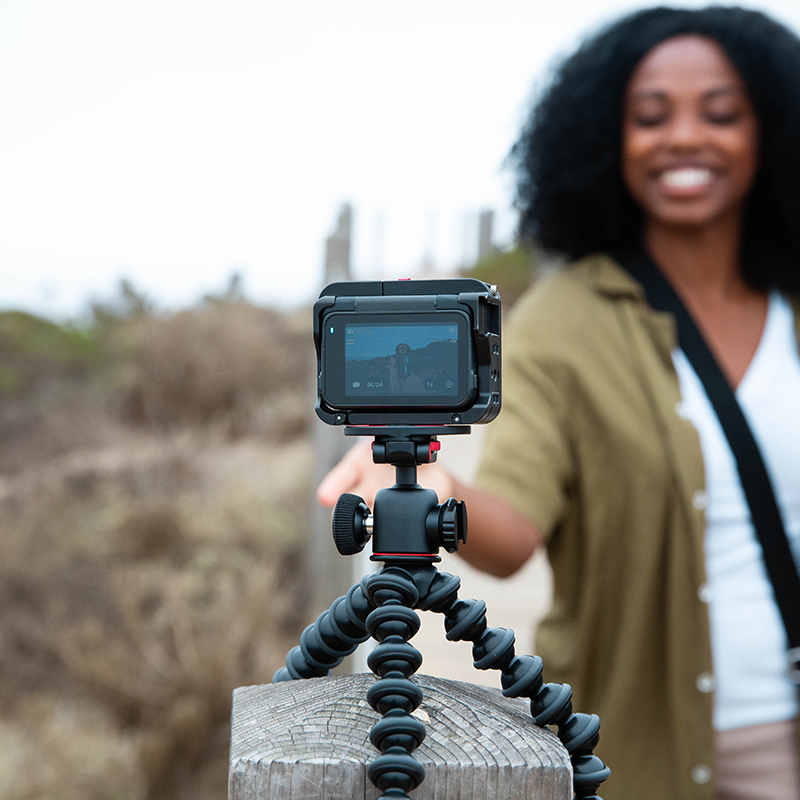
Stable support also frees you to appear in your own footage. Solo adventurers often come home with hours of scenery but no shots of themselves enjoying it. Setting the camera on a compact tripod and stepping into the frame fixes that, turning a collection of views into a story with a main character.
Handheld Versus Mounted: What Really Changes
Handheld shooting is quick and spontaneous, and it has its place. But comparing it side by side with mounted footage reveals clear differences in a few key areas.
Stability and Horizon Control
Handheld action footage tends to drift. The horizon tilts gradually as your wrist tires, and quick corrections create sudden jerks. Electronic stabilization smooths small shakes but often crops the frame to do so. A mounted camera starts level and stays level, so the stabilization system has less work to do and you keep more of the original image.
Framing and Storytelling
When you hold the camera, framing follows your attention, which is not always where the action is. A deliberately placed tripod lets you compose a scene first, then let the action unfold within it. A cyclist riding through a carefully framed bend, or a paddler gliding past a fixed shoreline shot, gives viewers a sense of scale and place that constant handheld footage rarely provides.
Fatigue and Battery Life
Holding a camera at arm’s length for long stretches is tiring, and tired arms produce shakier video. There is also a practical benefit to shooting fewer, better-planned mounted clips instead of recording everything handheld and hoping for usable moments. You drain the battery less, fill the memory card more slowly, and spend far less time scrubbing through footage later.
Choosing Support Based on Your Activity
Different adventures call for different setups, and matching support to the activity keeps footage stable and the camera secure. Cyclists often benefit from a clip or clamp that attaches to a handlebar or frame for riding shots, combined with a compact tripod for roadside scenes. Hikers value lightweight, flexible support that can stand on uneven rock or wrap around a branch for group shots at viewpoints.
Winter sports bring cold hands, bulky gloves, and slippery surfaces, so simple controls and a secure grip matter. A short, sturdy tripod planted firmly in packed snow is useful for capturing friends coming down a run. Water activities require waterproof housings and extra attention to secure mounting, since a camera dropped from a boat or paddleboard is usually gone for good. For skateboarding and street sports, a low tripod placed at ground level captures dramatic, close-to-the-action angles that make tricks look bigger and faster.
Whatever the activity, the most practical approach is often a small combination: one versatile tripod that can stand, grip, or clip, plus the mounts that came with your camera. JOBY designs many of its compact supports around this kind of adaptability, so a single piece of gear can cover several roles in one outing.
Mounting Habits That Keep Your Camera Safe
Losing an action camera mid-adventure is a painful way to end a trip, and most losses come from a few avoidable mistakes. These habits reduce the risk considerably:
- Tighten every screw and thumb knob, then give the camera a firm tug before you start moving.
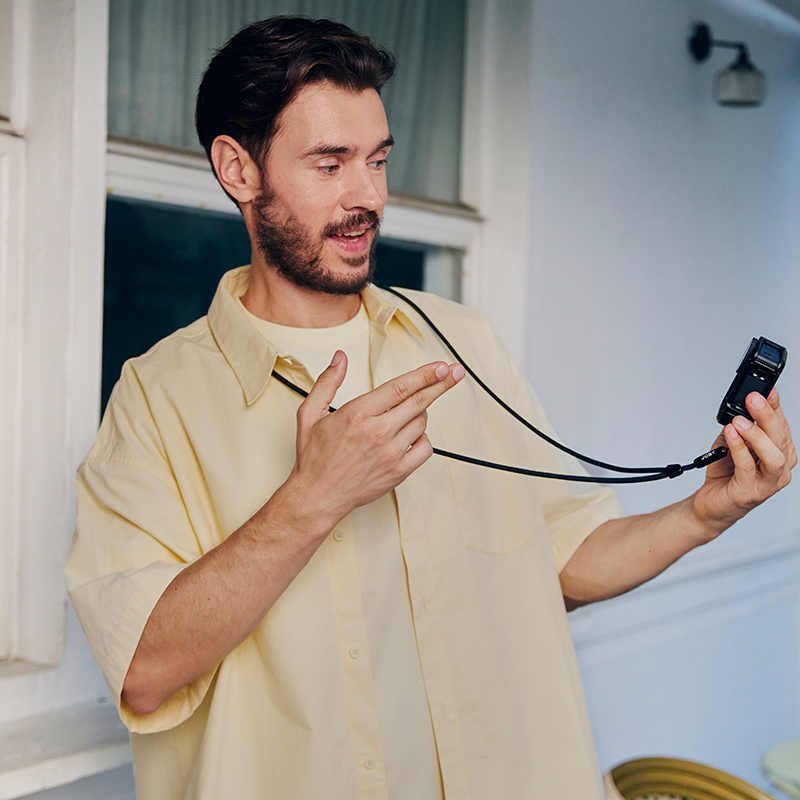
- Use a tether or lanyard as a backup whenever you shoot near water, heights, or fast-moving traffic.
- Check mounts again after a bumpy stretch, since vibration can gradually loosen connections.
- Rinse off sand, salt, and mud after each outing so threads and joints keep working smoothly.
A quick pre-ride or pre-hike routine takes less than a minute and becomes second nature after a few trips. It is far easier than retracing your route looking for a small camera in tall grass.
Angles Only a Stable Base Can Deliver
Once your camera is secure, you can start experimenting with shots that are nearly impossible handheld. Time-lapses are the classic example. Place the camera on a tripod facing a mountain ridge, a busy harbor, or a campsite at dusk, and let it record for several minutes. Compressed into a few seconds, the result adds drama and a sense of time passing to your edit.
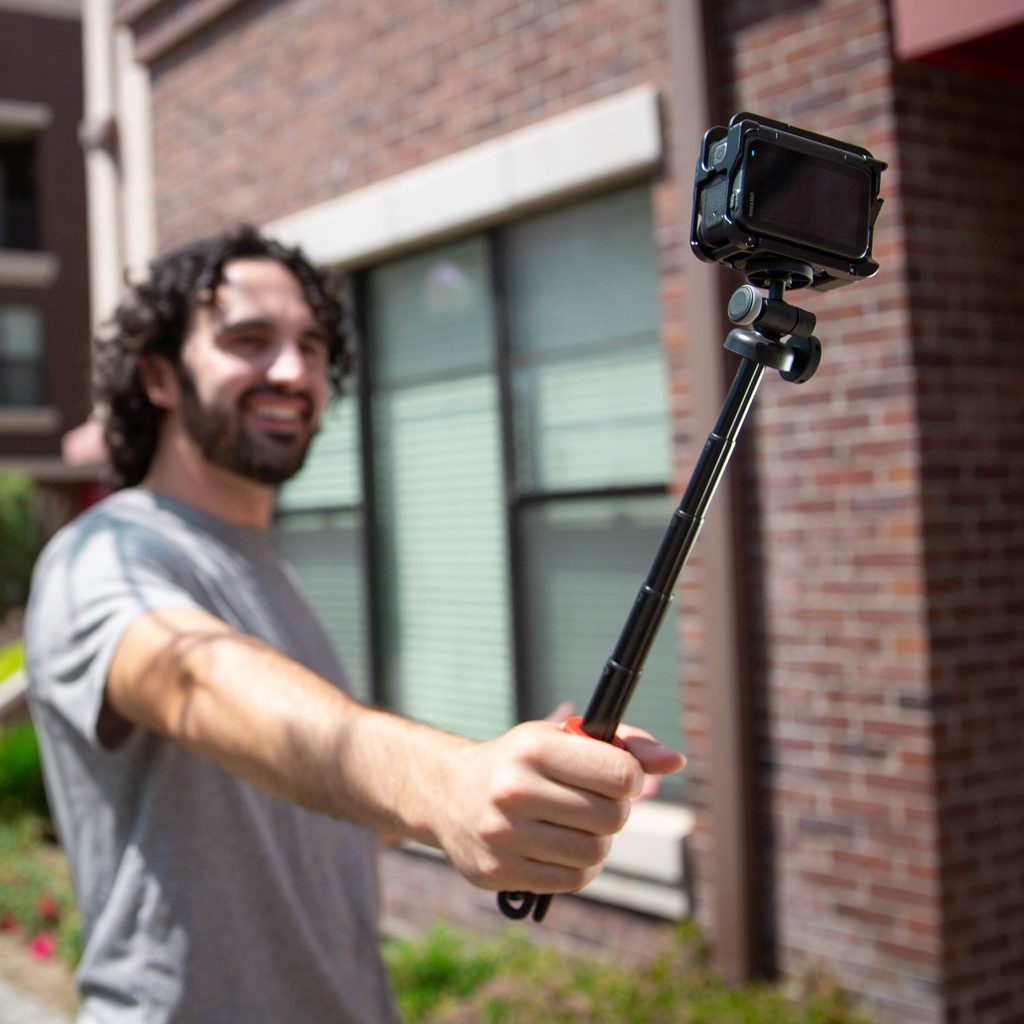
Low angles are another strength. Setting the camera just above the ground as a runner, cyclist, or skier passes by makes the action feel faster and more intense. Overhead angles work too: extend a tripod or grip upward to capture a campsite layout, a picnic spread, or a group gathered around a trail map.
Point-of-view contrast is another technique worth trying. Record a stretch of trail from a helmet or chest mount, then set up a tripod a little farther along and capture yourself riding through the same section from the outside. Cutting between the two perspectives in your edit lets viewers feel the ride and see it at the same time, which makes even a modest trail look far more exciting.
Interviews and reactions benefit from stable support too. After a big climb or a first successful jump, place the camera on a tripod at chest height, frame yourself or a friend from the waist up, and talk through what just happened. These short, steady moments add personality and give your audience a reason to care about the action that follows.
Finally, consider static wide shots at the start and end of each segment. These establishing and closing shots give viewers breathing room between fast sequences and help your audience understand where the adventure took place. Mixing handheld energy with stable, composed moments produces a video with real rhythm.
Stable Footage for Every Adventure
Action cameras capture the energy of your adventures, but stability is what makes that energy watchable. Handheld shooting still has a role in spontaneous moments, yet mounted and tripod-based shots deliver level horizons, deliberate framing, and angles that bring viewers into the scene. They also put you in your own story, which is often what friends and followers want to see most.
Choose support that fits your activity, build a quick safety check into every outing, and experiment with time-lapses, low angles, and wide establishing shots. With those habits in place, your footage shifts from a stream of shaky clips into a cohesive story of where you went and what it felt like. The next time you head out on the bike, the trail, or the water, bring a compact tripod alongside the camera. It takes up little space, and it may be the difference between footage you forget and footage you are proud to share.