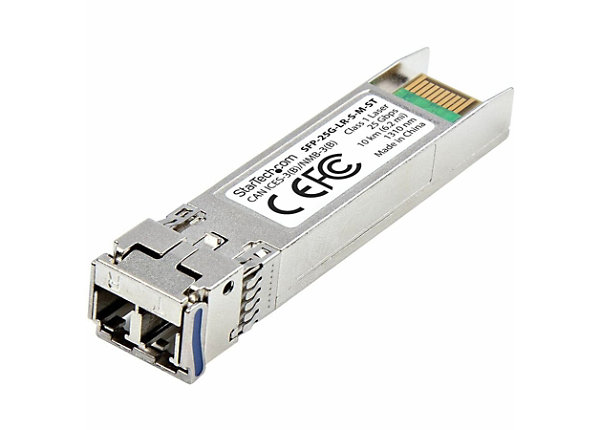
25GBASE-LR and the Operational Side of Network Stability
Why 25GBASE-LR Is Often Chosen for Networks That Must Stay Quiet
Some network technologies attract attention because they are fast, new, or technically impressive. Others earn their place by doing the opposite — by staying quiet. 25GBASE-LR belongs firmly to the second category. It is often deployed in environments where the highest priority is not peak performance, but predictable behavior over long periods of time.
In production networks that support business-critical systems, silence is valuable. Fewer alarms, fewer unexpected interactions, and fewer edge cases make daily operations manageable. 25GBASE-LR fits naturally into this mindset because it extends existing Ethernet practices without changing how networks are fundamentally operated.
Operational Predictability Over Raw Capability
From an operational perspective, the appeal of 25GBASE-LR lies in how boring it is. It behaves like Ethernet optics that teams already understand, just with more capacity and longer reach. There are no new layers to manage, no advanced tuning parameters to obsess over, and no specialized optical skill sets required to keep links healthy.
This predictability reduces cognitive load for operations teams. When a link degrades, the likely causes are familiar: fiber quality, connector cleanliness, or gradual optical aging. Engineers are not forced to diagnose complex signal interactions or software-defined behaviors. In many organizations, this alone justifies the choice.
The Role of 25GBASE-LR in Reducing Operational Risk
Risk in networks is rarely about a single failure. It is about how failures propagate and how quickly teams can respond. 25GBASE-LR reduces risk by limiting the blast radius of change.
Upgrading a long-reach link from 10G to 25G network does not require architectural redesigns. Switch configurations remain largely the same. Monitoring thresholds can be adjusted incrementally. Rollback plans are straightforward. If a problem appears, reverting to a known-good state is simple and fast.
This controlled change model is particularly important in environments with strict uptime requirements or limited maintenance windows.
Maintenance, Spares, and Lifecycle Simplicity
Another operational advantage of 25GBASE-LR is lifecycle alignment. These modules tend to age in predictable ways and align well with standard hardware refresh cycles. This simplifies spare management and reduces the need for specialized inventory.
For operations teams, fewer module types and fewer exceptions make logistics easier. Replacement procedures are familiar. Compatibility testing is minimal. Over time, this simplicity compounds, saving both time and attention.
Why Operations Teams Often Prefer 25G Over Higher-Speed Options
While higher-speed optics may offer impressive specifications, they also introduce complexity. More power, tighter margins, and more sensitivity to fiber conditions can increase operational friction. 25GBASE-LR avoids many of these issues by staying within comfortable physical and thermal boundaries.
In many real networks, links do not run near maximum utilization all the time. Choosing a solution that matches actual usage rather than theoretical peak demand often leads to smoother operations. 25GBASE-LR supports this pragmatic approach.
Monitoring and Visibility in Day-to-Day Use
Visibility is another area where 25GBASE-LR module shines quietly. Standard Ethernet monitoring tools provide sufficient insight into link health. There is no need for additional optical analytics platforms or specialized telemetry pipelines.
This matters in environments where operations teams already manage thousands of links. Consistency in monitoring reduces training requirements and minimizes mistakes during incident response.
25GBASE-LR in Long-Lived Network Segments
Not every part of a network evolves at the same pace. Some segments remain stable for years, serving predictable workloads. 25GBASE-LR fits well into these long-lived areas.
Access-to-aggregation links, campus interconnects, and regional facilities often fall into this category. They benefit from additional capacity, but rarely demand constant scaling. Deploying 25GBASE-LR here balances performance improvement with long-term operational calm.
The Human Factor: Why Familiarity Still Matters
Technology discussions often ignore human factors, but they matter deeply in operations. Teams develop intuition around systems they manage every day. That intuition breaks down when systems become too complex or unfamiliar.
25GBASE-LR respects this human reality. It allows engineers to rely on experience rather than documentation. When something feels “off,” they notice quickly. This intuitive awareness is difficult to quantify, but invaluable in maintaining reliable networks.
Limitations Seen Through an Operational Lens
From an operational viewpoint, the limitations of 25GBASE-LR are clear and manageable. It is not designed for ultra-long reach or rapid capacity scaling. However, these limitations are predictable and rarely surprising.
Knowing exactly where a technology stops being appropriate helps operations teams plan ahead rather than react under pressure.
Conclusion
25GBASE-LR earns its place not by being flashy, but by being dependable. It supports stable operations, predictable maintenance, and incremental change. For networks where uptime, clarity, and operational confidence matter more than headline speeds, 25GBASE-LR is not just a technical option — it is an operationally sound decision.
Keep an eye for more latest news & updates on Tamil Print!